
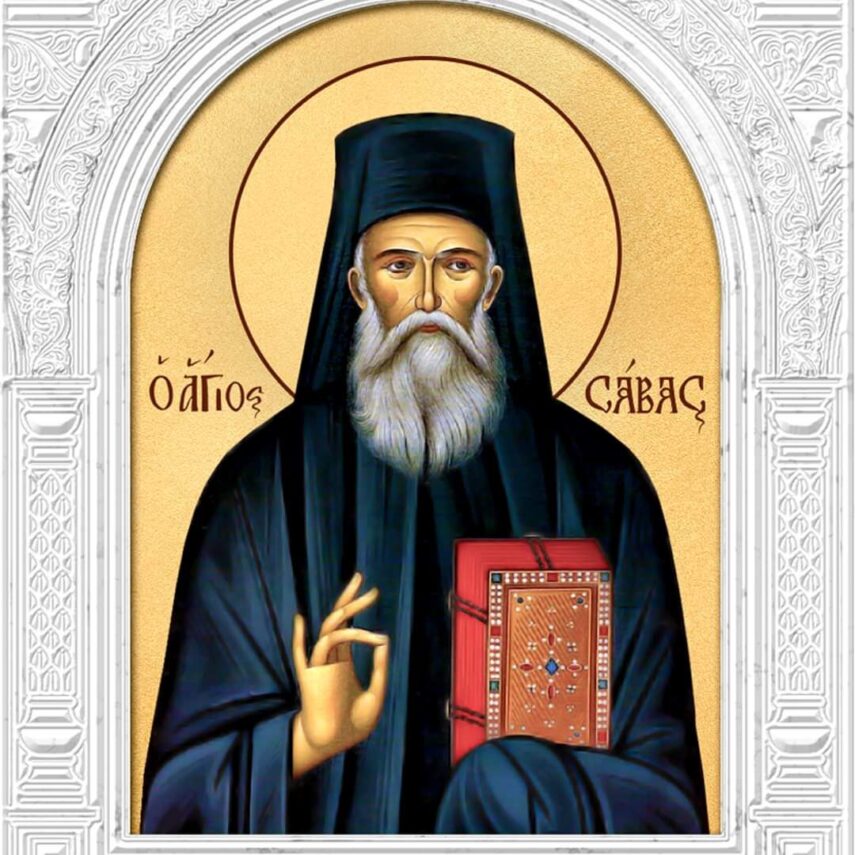
The Life and Legacy of St. Savvas of Kalymnos: A Beacon of Faith and Inspiration.
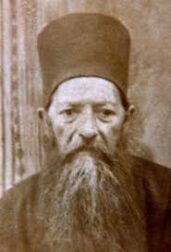
Saint Savvas of Kalymnos, also known as Saint Savvas the New, is the patron saint of the Greek island of Kalymnos, where he spent the last twenty years of his life. Born Vassilios Iachnou in Herakleitsa, Eastern Thrace, in 1862, he was the only child of Constantinos and Smaragda, both devout yet poor. His early life was marked by a profound calling to monasticism, which led him to leave home at the age of twelve to join St. Anne’s Skete on Mount Athos.
During his monastic journey, St. Savvas traveled to Jerusalem, where he joined the Monastery of St. George Hozeva. He lived as a hermit in the rugged cliffs, dedicating himself to prayer and iconography. His spiritual path continued through Greece, where he found temporary refuge on the island of Patmos and later formed a deep spiritual bond with St. Nektarios of Aegina.
In 1919, St. Savvas was invited to Kalymnos, where he served as the priest and spiritual father of the nuns at the Convent of All Saints. He remained there until his repose on April 7, 1947. His remains were exhumed in 1957, exuding a heavenly fragrance, confirming his sanctity.
born Vassilios Iachnou in Herakleitsa, Eastern Thrace, in 1862, is revered as a modern-day saint in the Orthodox Christian tradition. He displayed signs of deep spirituality from a young age, and after his family’s relocation to Constantinople, he pursued his education and spiritual calling. In 1887, he entered monastic life at the Monastery of St. John the Theologian on the island of Patmos, where he was tonsured a monk and received the name Savvas.
St. Savvas’s journey took him to various monastic communities, including Mount Athos and Alexandria, where he deepened his spiritual practice and theological knowledge. He was ordained a deacon in 1890 and a priest in 1902. His monastic life included rigorous ascetic practices, deep prayer, and unwavering faith. Eventually, he returned to Kalymnos in 1919, where he spent the remainder of his life in prayer, teaching, and pastoral care until his repose in 1948.
Stories of His Miracles and Impact
St. Savvas is remembered for his miraculous deeds and the deep spiritual impact he had on those around him. Among the many miracles attributed to him, there are numerous accounts of healings, both physical and spiritual. One notable miracle is the healing of a young boy who was paralyzed. Through the prayers and intercessions of St. Savvas, the boy regained his ability to walk, an event that profoundly strengthened the faith of the local community.
St. Savvas was also known for his clairvoyance and ability to foresee future events. His spiritual wisdom and insights provided guidance and solace to many who sought his counsel. His reputation for holiness and his miracles drew people from far and wide, seeking his blessings and prayers.
His influence extended beyond his life on earth, as many people report experiencing his intercessions and miraculous help even after his repose. His relics, which rest in the Monastery of All Saints in Kalymnos, continue to be a source of healing and spiritual strength for pilgrims.
How Our Parish Honors St. Savvas
At the St. Savvas of Kalymnos parish in Palmerston, we honor our patron saint through various spiritual and community activities. Our church is a place of gathering, prayer, and reflection, where the legacy of St. Savvas is alive in our hearts and actions. We celebrate his feast day with special liturgical services, processions, and communal meals, reflecting the unity and faith he inspires in us.
Our parish also engages in charitable activities, echoing St. Savvas’s commitment to helping those in need. We support local and international charitable organizations, provide assistance to the less fortunate, and foster a spirit of compassion and generosity within our community.
Quotes and Teachings from St. Savvas that Resonate with Modern Life
St. Savvas’s teachings are timeless, offering profound insights that resonate with our modern lives. Here are a few quotes and teachings that continue to inspire us:
- On Humility and Service: “Humility is the foundation of all virtues. Serve others with love, expecting nothing in return.”
- On Prayer: “Prayer is the breath of the soul. Never cease to pray, for it is through prayer that we connect with the divine.”
- On Faith and Trust in God: “In times of difficulty, trust in God’s providence. He never abandons those who seek Him with a sincere heart.”
- On Love and Compassion: “Love is the greatest commandment. Love one another as Christ loves us, and let compassion guide your actions.”
These teachings remind us to cultivate humility, engage in constant prayer, trust in God’s plan, and embody love and compassion in our daily lives. They serve as a guiding light, helping us navigate the challenges of modern life while staying true to our faith.
St Savvas was the clergyman who conducted the funeral service for Saint Nektarios, and was also the one who painted the first icon of the saint
One day St. Savvas asked the abbess not to let anyone disturb him for forty days, during which he remained confined to his cell in which the nuns could hear constant conversation (between the living Saint and the reposed Saint). After 40 days, he came out of his cell holding an icon of the saint. He handed it to the abbess and asked her to place it in the church for veneration. The abbess was surprised since Nektarios had not been formerly glorified (“canonized”) as a saint, and was afraid that the convent would get into trouble. Although Savvas was always meek and humble, he insisted, and told her in a commanding manner: “You must show obedience. Take the icon and place it on the icon stand, and do not scrutinize the will of God.” He knew the holiness and purity of St. Nektarios.
The Spiritual Bond Between St. Savvas of Kalymnos and St. Nektarios of Aegina: A Story of Friendship and Holiness
The relationship between St. Savvas of Kalymnos and St. Nektarios of Aegina is a remarkable testament to the deep spiritual connections that can exist between saints. Their friendship and mutual respect not only enriched their own spiritual lives but also left a lasting legacy that continues to inspire the faithful today. One of the most poignant aspects of their relationship is St. Savvas’s role in conducting the funeral service for St. Nektarios and his painting of the first icon of the saint.
The Meeting of Two Saints
St. Savvas and St. Nektarios met in 1919 when St. Savvas was invited to serve as a priest at the Convent of the Holy Trinity on the island of Aegina, where St. Nektarios was the abbot. This period was significant for both saints, as it marked the height of their spiritual development and the deepening of their friendship.
St. Nektarios, renowned for his wisdom, humility, and miracles, found in St. Savvas a kindred spirit and a trusted confidant. The two saints held each other in the highest esteem, each recognizing the other’s holiness and dedication to the monastic life. Their bond was strengthened by their shared commitment to prayer, asceticism, and spiritual guidance.
Conducting the Funeral Service for St. Nektarios
When St. Nektarios reposed in the Lord on November 8, 1920, the loss was deeply felt by the faithful, especially by those who had known him personally. St. Savvas, who had formed a close spiritual bond with St. Nektarios, was given the solemn responsibility of conducting the funeral service for his beloved friend.
The funeral service was a deeply moving and solemn occasion, marked by the reverence and respect that St. Savvas had for St. Nektarios. Through his prayers and the liturgical rites, St. Savvas honored the life and legacy of St. Nektarios, ensuring that his spiritual brother received a fitting farewell. This act of love and respect further cemented the bond between the two saints, even in death.
Painting the First Icon of St. Nektarios
After the repose of St. Nektarios, St. Savvas continued to honor his friend’s memory in a profound and lasting way. One day, he requested the abbess of the convent not to let anyone disturb him for forty days. During this period, the nuns heard constant conversation coming from St. Savvas’s cell, as if he were speaking with someone else. It was believed that St. Savvas was communicating with the spirit of St. Nektarios.
At the end of the forty days, St. Savvas emerged from his cell holding an icon of St. Nektarios. This icon, the first to depict St. Nektarios, was a testament to the deep spiritual connection and the high regard that St. Savvas had for him. Despite the fact that St. Nektarios had not yet been formally canonized, St. Savvas insisted that the icon be placed in the church for veneration, declaring, “You must show obedience. Take the icon and place it on the icon stand, and do not scrutinize the will of God.”
The Legacy of Their Friendship
The relationship between St. Savvas and St. Nektarios is a beautiful example of the power of spiritual friendship and mutual respect. Their lives and their bond continue to inspire the faithful, reminding us of the importance of supporting and uplifting one another in our spiritual journeys.
St. Savvas’s role in conducting the funeral service for St. Nektarios and painting his first icon is a testament to his deep love and reverence for his friend. It also highlights the enduring legacy of St. Nektarios, whose sanctity was recognized and honored by his contemporaries even before his official canonization.
Apolytikion
Let us faithful praise Holy Savvas, the glory and protector of Kalymnos,
and peer of the Holy Ascetics of old;
for he has been glorified resplendently as a servant of Christ,
with the gift of working miracles,
and he bestows upon all God’s grace and mercy.
Kontakion
Today the island of the Kalymnians celebrates your holy memory with a rejoicing heart;
for it possesses as truly God-given wealth,
your sacred body that has been glorified by God, O Father Savvas,
approaching which they receive health of both soul and body.
Megalynarion
Rejoice, thou new star of the Church,
the offspring of Thrace and the beauty of Kalymnos,
O God-inspired Savvas, fellow citizen of angels and equal of all the saints.